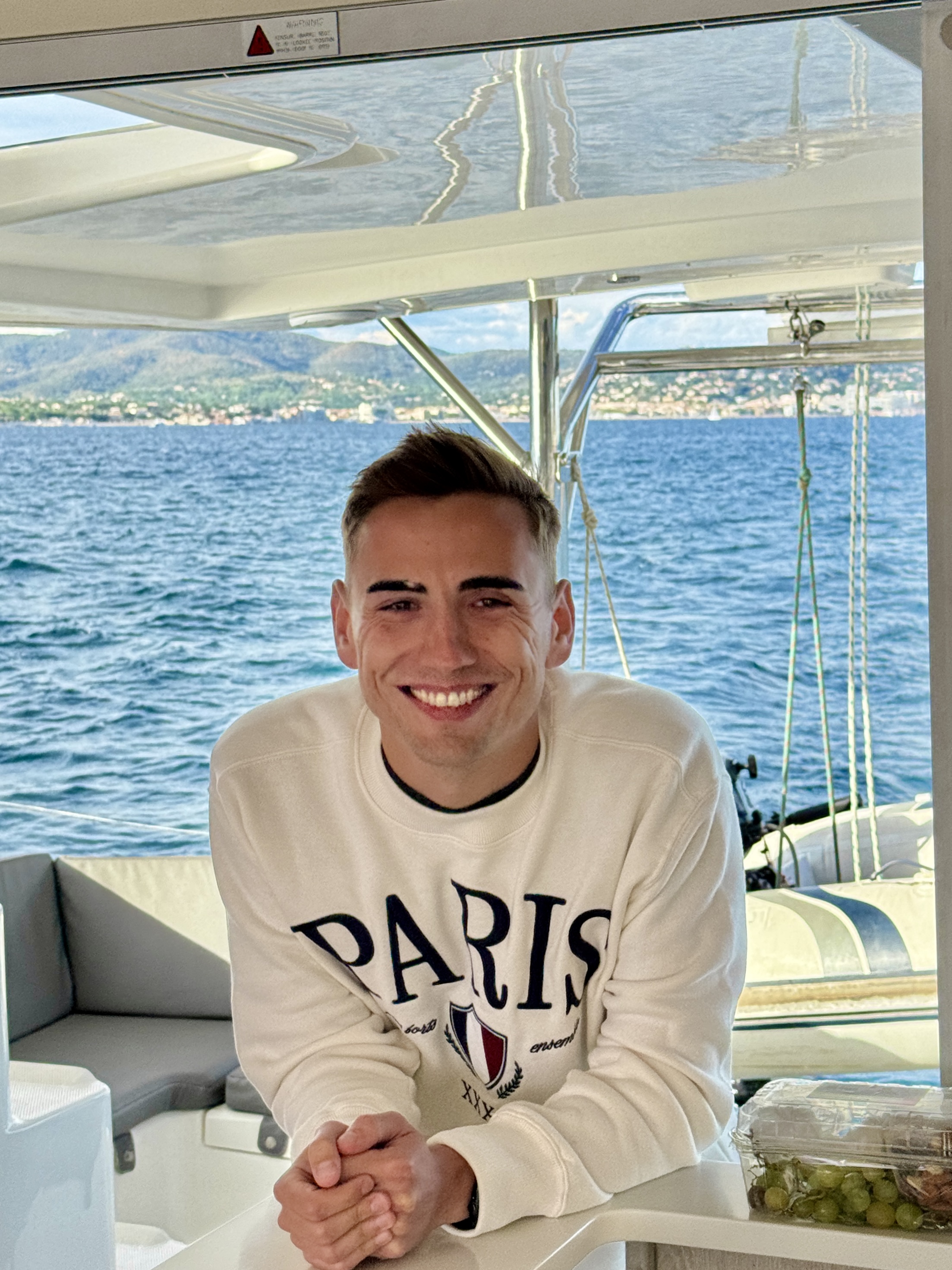
I've spent the last decade figuring out how to make people care — about brands, about products, about coming back. It sounds simple. It is not.
My career started at Merkle, where I cut my teeth running multichannel campaigns for the Volkswagen Group — VW, Audi, SEAT, SKODA. That turned into something more interesting when I was brought in to help launch CUPRA as a standalone brand, building the prospect nurturing and retention programmes from scratch. It was a masterclass in what happens when you combine first-party data with a brand that actually has something to say.
From there I moved to Plinc, where I spent four years directing CRM strategy for brands like Halfords, Prezzo, and MADE.com. The highlight was probably the Halfords Motoring Club — a loyalty programme I launched that drove 25%+ new customer acquisition, doubled clickthrough rates, and saw premium members visiting 32% more frequently than non-members. Or maybe it was Club Prezzo, which hit a million signups in its first year. Hard to pick.
I also introduced advanced personalisation models — Future Value scoring, Category Affinity, Next Best Action — that fundamentally changed how these brands spoke to their customers. Less spray-and-pray, more surgical precision. Two DMA Awards suggest the approach worked.
Now I'm at Utility Warehouse, leading partner engagement marketing. In the first few months I've driven a 19% lift in partner reactivation (exceeding targets by 2–3x), overhauled the flagship newsletter to a 24% increase in click-to-open rates, and introduced gamified experiences that delivered a 77% uplift in engagement. I'm using AI tooling to run test-and-learn programmes at a pace that would have been impossible two years ago.
I graduated with First Class Honours in Business Information Systems from the University of Westminster, which is a fancy way of saying I've always sat at the intersection of data and commercial thinking. That hasn't changed — I still believe the best marketing is built on numbers, not gut feeling. But I also believe that if your campaign reads like it was written by a spreadsheet, you've already lost.
The work I'm most proud of has always been the same: taking a brand's data, finding the story hiding inside it, and turning that into something a customer actually wants to receive. That's harder than it sounds. That's what makes it interesting.